
Right now, if you want to work in Ireland on a Critical Skills Employment Permit, you have to apply to different government offices, one after another. It takes time, and it can be confusing.
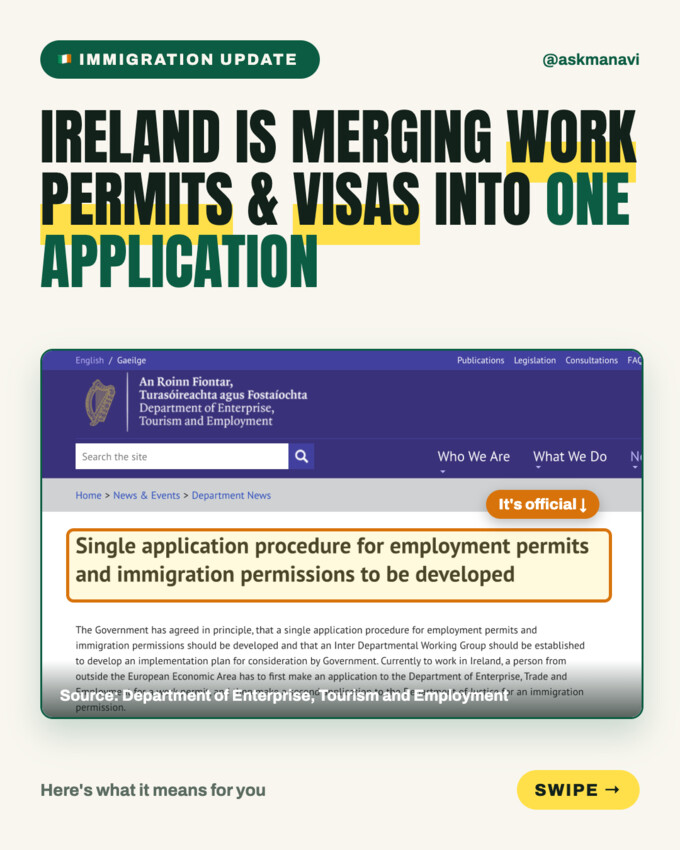
The Irish Government now plans to test a simpler system. Instead of several separate applications, you would make one application to both work and live in Ireland.
What did the Government announce?
On 25 October 2026, RTÉ News reported that:
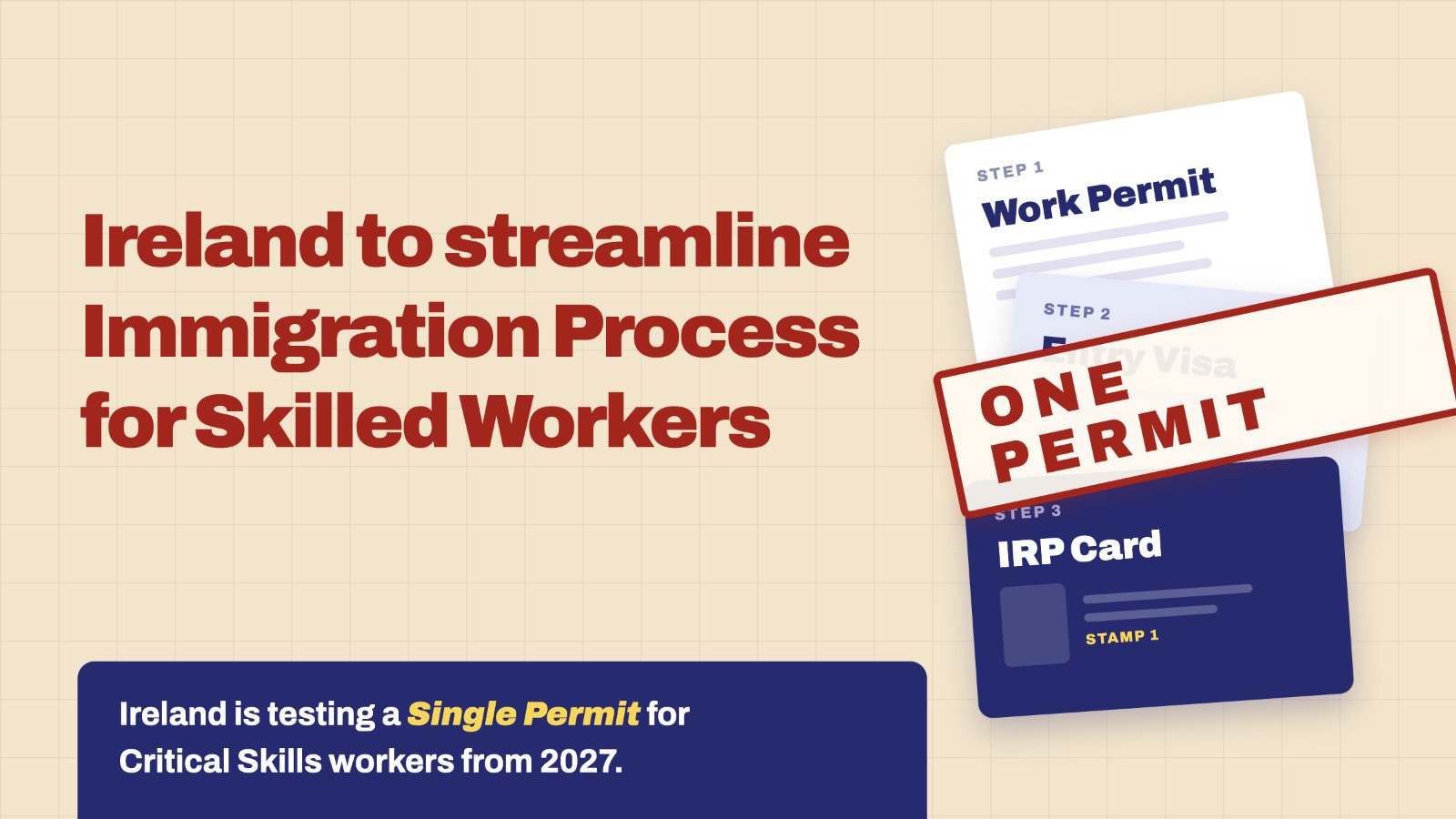
- Ireland will test a new Single Permit system, starting in the first half of 2027.
- The test will begin with the Critical Skills Employment Permit (often called CSEP). This permit is for skilled jobs that Ireland needs more people for, like nurses, software developers and IT workers.
- The change will happen step by step, not all at once.
In 2024, Ireland gave out more than 17,000 Critical Skills permits, so this could help a lot of people.
This plan has been coming for a while. In 2024, the Government agreed to move towards one permit for work and living in Ireland. At that time, Ireland and Denmark were the only EU countries without this kind of system.
How does it work today?
Today, most people coming on a Critical Skills permit go through three separate steps:
- 1Get the work permit. You (or your employer) apply to the Department of Enterprise, Tourism and Employment. This is the department that gives out work permits in Ireland.
- 2Get the visa. If you are from a country that needs a visa to enter Ireland (for example India, Pakistan or Nigeria), you then apply for a work visa. This is a separate application to the Department of Justice.
- 3Register after you arrive. Once you are in Ireland, you register with immigration and get your Irish Residence Permit (IRP) card. This card shows you are allowed to live here.
Each step has its own form, its own fee and its own waiting time. If one step is slow, everything after it is delayed too. This is hard for workers, who are often waiting to resign from their current job, and for employers, who keep moving start dates.
What is a Single Permit?
A Single Permit means one application and one decision that gives you permission to both work and live in a country. Most countries in Europe already do this. So do the UK, Canada, New Zealand and the US.
If Ireland's new system works the same way, it could mean:
- Fewer forms: you share your details once, not again and again
- Less waiting between steps: fewer delays from passing files between departments
- Clearer timelines: easier to plan your move, your notice period and your start date
- Less paperwork for employers: especially companies hiring many people, like hospitals and tech firms
- Ireland becomes more attractive: other countries are competing for the same skilled workers
What we don't know yet?
This is only an announcement. The full rules have not been published. We are still waiting to find out:
- The exact start date in 2027
- Who can join the test (everyone, or only some people)
- Which steps will be joined into one
- How much it will cost
- How long a decision will take
- When other permits, like the General Employment Permit, will be included
What should you do now?
Nothing changes yet. Until the new system starts, all applications follow the current rules.
If you want to work in Ireland:
- Don't wait. If you have a job offer now, go ahead with your application. Waiting for 2027 could cost you the job.
- Get your documents ready: passport, degree certificates, CV and proof of work experience. You will need these under any system.
- Check your job qualifies. Make sure it is on the Critical Skills Occupations List and the salary is high enough.
If you are an employer:
- Stay flexible for 2027. If you hire people on Critical Skills permits often, the new system may help you hire faster.
- Keep current applications moving. Don't pause anything while you wait for news.
- Expect some early problems. New systems can be slow at first, so give extra time for start dates in early 2027.
The bottom line
This is good news. Applying to work in Ireland should become simpler, with one application instead of several. But it is only a test, it starts in 2027, and many details are still missing.
For now, the best thing you can do is send a strong, complete application under today's rules.